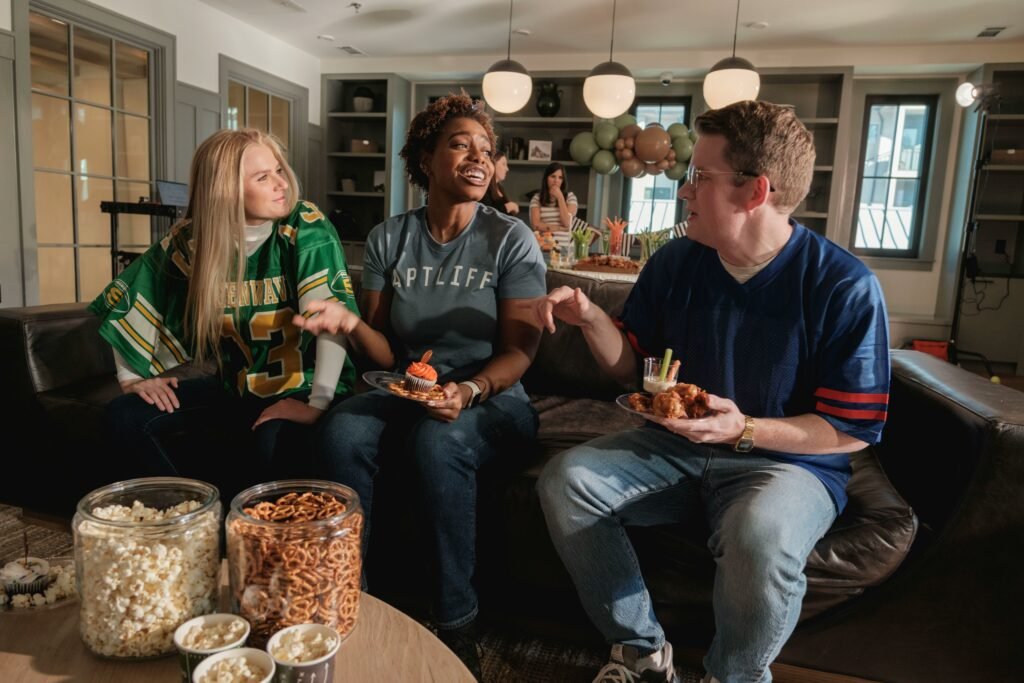
When eating at Friends’ Houses and Social events, food is often at the centre of birthdays, family gatherings, parties, barbecues, school events, and meals with friends. When you live with allergies, these situations can feel awkward at times — not just because of the food itself, but because of the social pressure that can come with it.
This guide explains how to handle social situations with more confidence, ask the right questions without feeling rude, and reduce allergy risks while still enjoying time with other people.
Quick Tips Before You Go
- Let the host know about the allergy in advance
- Do not feel awkward about asking questions
- Bring safe food if that makes things easier
- Be careful with buffets, shared snacks, and desserts
- Do not rely on guesswork or reassurance alone
- Trust your instincts if something does not feel right
Why Social Situations Can Feel Difficult
Allergies in social settings can be challenging because there is often pressure to be relaxed, grateful, or “not make a fuss.” Hosts may mean well but not fully understand the seriousness of the allergy, the risk of cross-contamination, or the importance of checking ingredients carefully.
That can leave people feeling torn between politeness and safety.
The truth is, your health comes first. Good friends, hosts, and family members will want to understand what helps keep you safe.
1. Tell People in Advance
If you are going to someone’s house or attending an event where food will be served, it usually helps to mention the allergy before the day itself.
This gives the host time to:
- check ingredients
- plan alternatives
- ask questions
- avoid awkward last-minute confusion
It also reduces pressure on you when you arrive.
You do not need to write an essay. A simple message is often enough, such as:
“Just to let you know, I have a serious allergy to [allergen], so I need to be careful with ingredients and cross-contamination.”
That sets the tone clearly and kindly.
2. Do Not Be Afraid to Ask Questions
Even if someone is lovely, confident, and well-meaning, it is still okay to ask questions.
Helpful things to ask include:
- What ingredients were used?
- Was it made from scratch or bought in?
- Is the packaging still available to check?
- Has it come into contact with [allergen]?
- Were shared utensils or surfaces used?
You are not being rude by checking. You are being responsible.
If the answers feel vague or unsure, it is okay to say no thank you.
3. Bring Safe Food If It Helps
Sometimes the easiest and least stressful option is to bring your own safe food, snack, or dessert.
This can be especially helpful for:
- children’s parties
- buffets
- barbecues
- school events
- family gatherings
- long days out
Bringing something safe can:
- reduce pressure on the host
- give you a reliable option
- stop you feeling hungry if nothing else is suitable
- help children feel included
It does not have to be awkward. In many situations, it is simply practical.
4. Be Careful with Buffets and Shared Food
Buffets, party tables, and shared snack bowls can be high risk for cross-contamination.
Common problems include:
- serving spoons moved between dishes
- crumbs falling into other foods
- people handling multiple foods with the same utensils
- unlabeled homemade dishes
- dips, platters, or snack bowls shared by lots of hands
Even if something looks safe at first, the risk can change quickly once lots of people start serving themselves.
If you are unsure, it is safest to avoid shared foods.
5. Desserts, Baking, and “Just a Little Bit”
Homemade cakes, desserts, and baked treats often come with the best intentions — but they can also be some of the hardest foods to judge safely.
This is especially true for allergies involving:
- milk
- egg
- wheat
- peanuts
- tree nuts
- sesame
Cross-contamination is also common in home kitchens where ingredients are reused, utensils are shared, or allergens are part of everyday cooking.
And remember: removing the visible allergen is not enough. Picking nuts off a cake or removing cheese from the top of something does not make it safe.
6. Children and Social Events
For children with allergies, parties and playdates can bring an extra layer of worry.
Helpful steps include:
- telling the host clearly in advance
- sending safe snacks or a safe meal if needed
- bringing a safe cupcake or treat so your child still feels included
- making sure medication is with them and easy to reach
- checking who is supervising food
- teaching children simple age-appropriate safety phrases
Children should not have to miss out entirely — but they do need safe planning around food.
7. It Is Okay to Say No
One of the hardest parts of allergy management can be saying no when someone has gone to effort.
But you are allowed to decline food if:
- ingredients are unclear
- packaging is not available
- the host is unsure what was used
- cross-contamination seems likely
- something just does not feel right
A polite no is better than an unsafe yes.
Most people would rather you stay safe than take a risk to spare their feelings.
8. Social Pressure Can Be Real
Sometimes the challenge is not the food — it is the pressure around it.
You may hear things like:
- “I’m sure it will be fine”
- “There’s only a tiny bit”
- “I made it especially”
- “You can just pick that off”
- “You’re so sensitive”
These moments can feel uncomfortable, but they do not change the facts. If the food is not safe, it is not safe.
You do not need to argue. A calm, clear response is enough.
For example:
“Thank you, but I can’t risk it if I’m not sure what’s in it.”
9. Make Things Easier on Yourself
Not every social food situation needs to be stressful.
Things that can help include:
- eating something before you go
- bringing a safe backup snack
- offering to bring a dish to share
- keeping your explanation simple
- deciding in advance what you are comfortable with
The more you remove pressure in advance, the easier the event often feels.
10. Trust Your Instincts
Social situations can make people second-guess themselves. You may worry about seeming rude, dramatic, or difficult.
But if something feels unclear or unsafe, trust that feeling.
Your job is not to keep everyone comfortable.
Your job is to keep yourself or your child safe.
That is not overreacting — it is sensible allergy management.
Quick Checklist Before Social Events
✅ Told the host about the allergy in advance
✅ Asked questions if needed
✅ Brought safe food or snacks
✅ Avoided risky shared foods if unsure
✅ Kept medication nearby
✅ Had a simple polite response ready
✅ Trusted your instincts
Final Thoughts
Allergies can make social events feel more complicated, but they do not have to stop you enjoying time with friends, family, and other people.
A little planning, clear communication, and the confidence to ask questions can go a long way. The aim is not to make every event perfect — it is to reduce risk and help you feel calmer, safer, and more included.
You deserve to enjoy the moment, not spend the whole time worrying about the food.
Related Guides
- Eating Out Safely with Allergies
- Cross-Contamination Explained
- Packing for Day Trips and Holidays with Allergies
- Travelling with Allergies: How to Plan Ahead and Stay Safe
Disclaimer: This guide is for general information only and should not replace medical advice. Always follow advice from your doctor or allergy specialist.